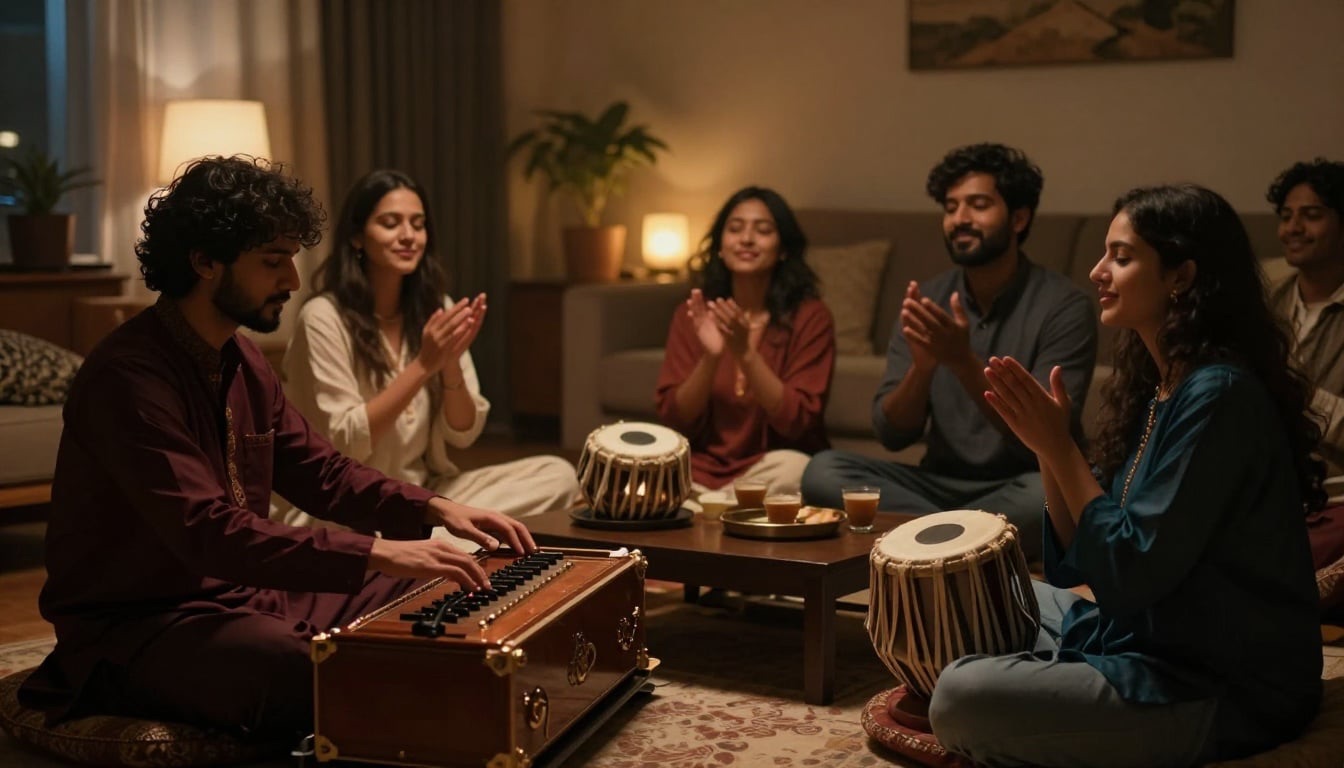
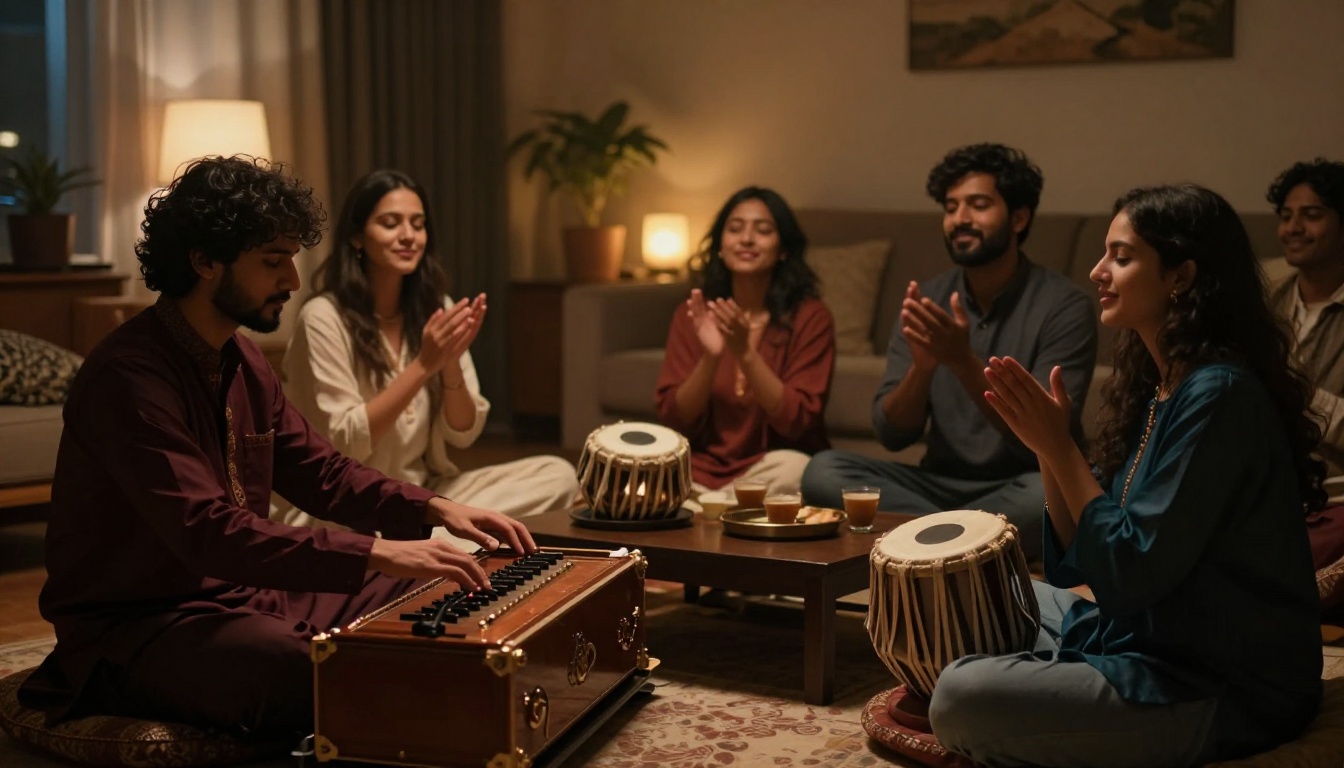
Imagine the soul-stirring voices of Qawwali singers filling your home, drawing everyone into a circle of devotion and joy. That electric pull of live Sufi music, once confined to grand shrines, now fits right in your living room. More people crave this deep, heartfelt experience away from crowded halls.
Qawwali comes from the Sufi tradition, a way to remember God through poetry and rhythm. It started in South Asia centuries ago, blending Persian roots with local sounds to spark spiritual vibes. The word means “to speak,” but it’s really about that raw emotion in songs that lift your spirit.
Hosting your own Qawwali night lets you share this rich culture with loved ones. It turns a simple get-together into something profound, like inviting a piece of history home. This guide walks you through every step to make your first one smooth and unforgettable.
Introduction: The Spiritual Resonance of Sufi Music at Home
You feel it—the way a Qawwali tune wraps around you like a warm embrace, pulling hearts closer. In our busy lives, folks yearn for that pure connection, far from noisy clubs or big events. Bringing it home? That’s magic in the making.
Rooted in Sufism, Qawwali honors divine love through chants and beats that echo dhikr, or remembrance of the divine. Born in the 13th century with saints like Amir Khusrau, it thrives on community, where listeners sway and clap in unity. Your home setup can capture that same bond, fostering talks and laughs long after the music fades.
Picture this: your space alive with melody, guests lost in the poetry. This blueprint covers planning, setup, food, and flow to host a Qawwali night that touches souls. You’ll end up with stories that last a lifetime.
Section 1: Pre-Planning and Setting the Spiritual Ambiance
Start early to weave that sacred feel into every corner. Good prep turns chaos into calm, letting the music shine. Think of it as building a small shrine in your own home.
Securing the Perfect Performers (The Qawwal Party)
Hunt for local talent through community centers or online groups focused on Sufi arts. Many Qawwals travel for small gigs, so reach out via email or calls to share your vision. Fees vary—expect $200 to $500 for a two-hour set, depending on the group size and your city.
Talk details like arrival time and how long they’ll play. They might need room for three to five singers plus instruments. Check their setup needs, such as outlets or a quiet warm-up spot.
Always ask for a sample clip of past shows. It helps you gauge their style—does it match the soft, poetic flow you want? One host I know skipped this and ended up with a mismatched group; don’t let that be you.
Venue Layout: Creating the Mehfil Space
Clear out furniture to open up the floor. Aim for a circle where everyone sees the performers clearly, boosting that close-knit vibe. In a mehfil, folks sit low, so grab cushions or mats to mimic traditional setups.
Push sofas against walls if space is tight. Leave a front area as the baithak for artists—keep it bare for their gear. Test acoustics by clapping; echoes mean you need rugs to soften the sound.
For 10 to 20 guests, a 15×15 foot room works fine. Arrange seats in a semi-circle facing the performers. This setup invites participation, like gentle sways during builds in the song.
Lighting and Décor: Evoking Devotional Warmth
Ditch bright overhead lights for something softer. Hang string lights or use candles in holders to cast a golden glow that matches shrine atmospheres. It helps folks relax into the music’s depth.
Add touches like embroidered throws over chairs or wall hangings with Urdu poetry. Place fresh roses or jasmine near the performance spot—scents from dargahs that stir memories. Keep it simple; clutter distracts from the soulful core.
One tip: dim lights as the show starts to signal quiet focus. Guests love snapping photos of the setup beforehand. Your home becomes a haven of peace.
Section 2: Technical Essentials for Superior Sound
Sound makes or breaks a Qawwali night. Clear voices cut through, letting lyrics hit home. Skip this, and the magic fizzles.
Sound System Requirements for Qawwali
Vocals lead the show, so grab at least two mics for the main singers and one for backups. A basic PA system with speakers handles small rooms—look for 100-watt models under $150. It balances the harmonium’s hum with sharp tabla beats.
Engineers say match mic frequencies to avoid feedback; place them away from speakers. For home use, wireless options free up movement during those passionate raqs moments. Test everything a day before to tweak volumes.
Qawwali demands dynamics—from whispers to roars—so choose gear that handles peaks without distortion. A simple mixer lets performers adjust on the fly. Your guests will thank you for that crisp, immersive audio.
Instrument Logistics and Placement
The harmonium sits center with the lead singer, its keys driving the melody. Tabla and dholak go to the side, close enough for tight rhythms but not blocking views. Clap sections involve the crowd, so position percussion where hands can join in visually.
Set up in the baithak area, facing the audience at eye level. Cords should run safely to avoid trips. Performers often tune on site, so give them 30 minutes.
Think flow: instruments form a semi-circle around the lead. This projects sound evenly and keeps energy bouncing back from listeners. One setup flaw can throw off the whole groove.
Power and Contingency Planning
Map out outlets near the stage—most gear needs steady juice. Use surge protectors to shield against spikes. For backups, pack extension cords and a power bank for mics if things go dark.
Qawwali runs 90 minutes to two hours, so plan for steady draw. In one story, a host’s breaker tripped mid-climax; a generator saved the day. Keep a flashlight handy for quick fixes.
Test the full rig during rehearsal. Reliable power keeps the spiritual flow unbroken, letting ecstasy build without a hitch.
Section 3: Curating the Authentic Culinary and Refreshment Experience
Food here isn’t just eats—it’s part of the blessing. Keep it light to match the music’s spirit. Overdo it, and you pull focus from the songs.
The Etiquette of Sharing (Niyaz)
Niyaz means offering blessed treats after the divine vibes peak. It’s a Sufi custom to share sweets or fruits as thanks. Hand them out post-performance to wrap the night in warmth.
Prepare portions for each guest—think small bowls of prasad-like items. This act binds the group, turning strangers into friends. Skip fancy plates; use simple disposables for easy cleanup.
In traditions, niyaz carries prayers, so infuse yours with good intent. Guests often leave feeling nourished in body and soul.
Menu Planning: Simplicity and Tradition
Go for chai with cardamom, nuts like almonds, and sheer khurma if you’re adventurous. These pair well with Qawwali’s sweetness without filling folks up. Avoid spicy or messy foods that demand attention mid-song.
Prep ahead: brew tea in a thermos, chop fruits into bowls. Set out on side tables for self-serve. One host served rosewater sherbet—guests raved about the cool refresh after intense listening.
Keep options vegetarian to honor the devotional tone. Simple means more time for music, less for kitchen chaos. Aim for items that last without spoiling.
Hydration and Comfort Stations
Place water jugs or bottles near seats—Qawwali stirs emotions, and throats dry fast. Add lemon slices for flavor. Make it easy; no one wants to trek far during a trance.
Set up a corner with extra cushions or fans for comfort. In warmer months, chilled towels surprise guests. Hydration keeps energy high through long sets.
Watch the clock—refills between songs prevent disruptions. Comfortable folks engage deeper, clapping louder in rhythm.
Section 4: Guest Management and Establishing Flow
Manage your crowd well, and the night flows like a river. Set rules gently to build respect. It’s about harmony, not control.
Invitation Etiquette and Expectations Setting
Send invites via text or email two weeks out. Say it’s a devotional music evening, starting at 8 PM sharp, lasting two hours. Stress quiet focus—no phones during performances.
Include a quick note on the flow: from opening prayers to rhythmic highs. One savvy host added a PDF with Qawwali basics—newbies loved it. Keep the list to 15-20 for intimacy.
Phrase it warm: “Join us for an evening of Sufi soul.” This draws the right crowd, eager for the experience.
Understanding the Structure of a Qawwali Performance
It kicks off with a Hamd, praising God, then Na’at for the Prophet. Poetry builds next, with tehai rhythms ramping tension. The haal climax hits with wild energy, often swaying.
Explain this to guests so they follow the arc. Like a story, each part layers emotion. Unfamiliar faces might sit stiff at first—your prep eases them in.
Performances vary, but most run 45-minute sets with breaks. Share a sample playlist beforehand for previews.
Encouraging Respectful Engagement
Clap during beats, not soft verses—it’s like cheering a team’s big play. Stay silent otherwise to let voices soar. At peaks, toss notes as nazar to honor the artists.
Guide with a pre-show whisper or sign: “Join the rhythm respectfully.” Kids can participate too, learning through claps. This builds a shared pulse.
Positive vibes spread—soon everyone’s in sync, creating that communal high.
Conclusion: Sustaining the Spiritual Afterglow
A great Qawwali night blends art with heart, leaving everyone renewed. You nail the spiritual side by honoring traditions in your setup. Tech and ambiance work hand in hand to amplify the joy.
Remember, sound clarity and reverent flow make it shine. From performers to niyaz, every choice deepens the bond. Your first try might have tweaks, but the warmth sticks.
Host that night soon—invite friends, light the lamps, and let the music weave its spell. You’ll craft memories that echo long after the last note. What’s stopping you from starting today?
Best page for sufi qawali music